
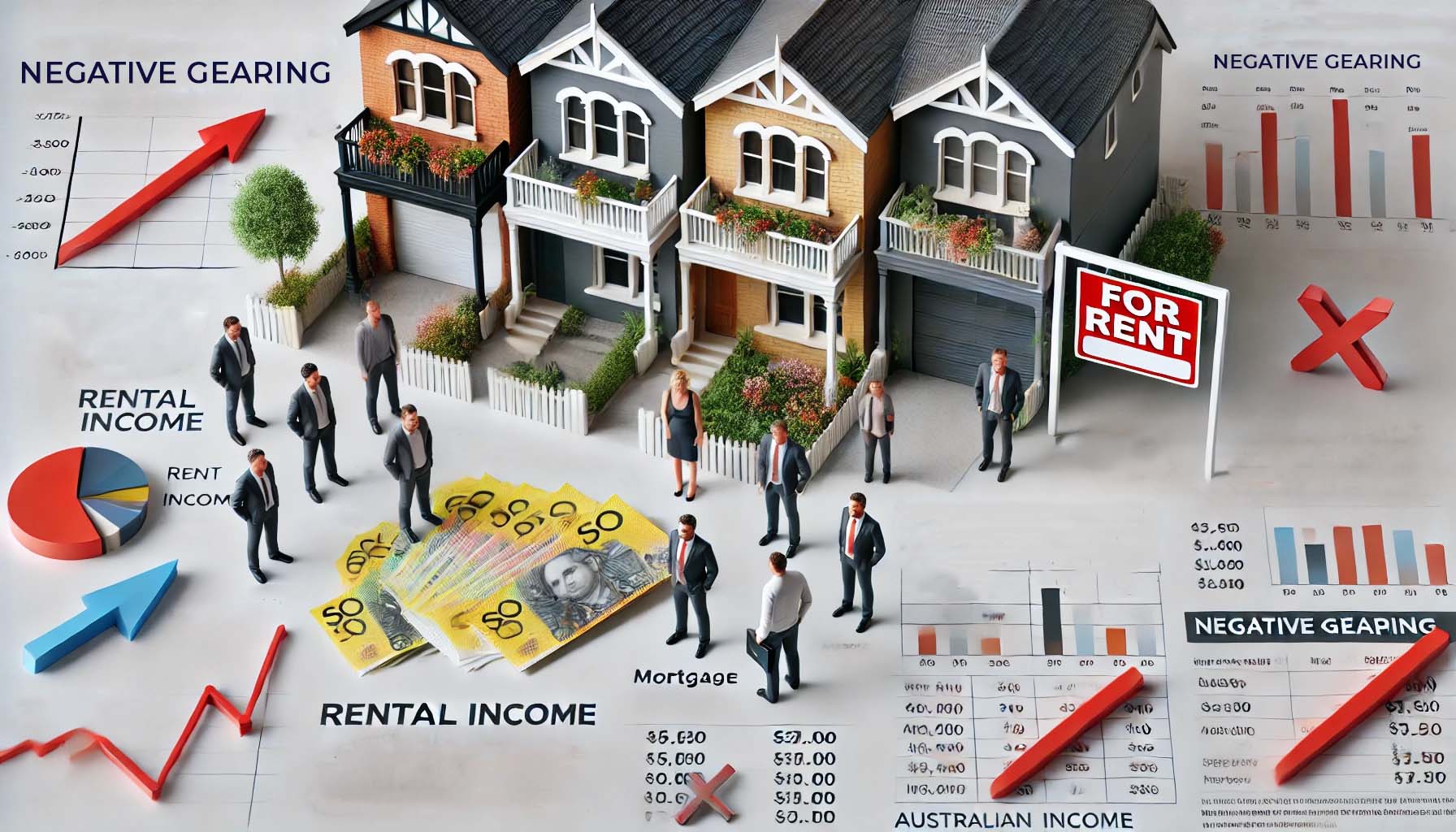
Negative gearing is a popular investment strategy among Australian property investors, but why do they use it, and why are investors crucial for the rental market? Let’s explore these questions.
What is Negative Gearing?
Negative gearing occurs when the costs associated with owning an investment property—such as mortgage interest, maintenance, and other expenses—exceed the rental income it generates. This results in a financial loss that investors can use to offset their other taxable income, reducing their overall tax liability.
Why Do Investors Use Negative Gearing?
One of the primary reasons investors use negative gearing is the ability to claim tax deductions on their financial losses. By offsetting these losses against their other income, investors can significantly reduce their taxable income, leading to lower tax bills.
Additionally, investors often accept short-term losses with the expectation that property values will appreciate over time. The capital gains realized from selling a property that has increased in value can far outweigh the initial losses from negative gearing.
Including real estate in an investment portfolio also helps diversify risk. Real estate can provide a stable and tangible asset that might perform differently compared to stocks or bonds, potentially balancing the overall investment risk. Even if the property is negatively geared, the rental income can still contribute to the investor’s cash flow, helping to cover part of the property expenses.
Why Investors are Important for the Rental Market
Investors play a crucial role in supplying rental properties to the market. With a growing population and varying housing needs, investor-owned properties help meet the demand for rental housing.
Many investors maintain and upgrade their properties to attract tenants, which can improve the overall quality of rental housing available. This can provide tenants with better living conditions and more options to choose from.
Moreover, investors contribute to the stability and growth of the real estate market. Their activities can stimulate economic activity in related sectors such as construction, property management, and real estate services.
Renting offers flexibility, especially for those who need to relocate for work, study, or other reasons. Investors provide the necessary rental options to accommodate this segment of the population.
Facts and Figures about Investors in Australia
According to the Australian Taxation Office (ATO), there were approximately 2.2 million property investors in Australia as of the latest available data.
Investor-owned properties account for around 27% of the total housing stock in Australia. This significant share highlights the crucial role of investors in providing rental accommodation.
In the 2018-19 financial year, Australian property investors claimed around $13 billion in net rental losses. These losses were used to reduce taxable income, underscoring the importance of negative gearing in tax planning.
Major cities like Sydney and Melbourne attract a large proportion of property investors due to higher rental yields and potential for capital growth. Regional areas are also seeing increased investment interest.
Insights from the PIPA Report and Current Challenges
The Property Investment Professionals of Australia (PIPA) 2023 Annual Investor Sentiment Survey provides valuable insights into the current state of the property investment market.
The report indicates that investor confidence has been waning, with many citing concerns about changing government policies, rising interest rates, and economic uncertainty.
Investors are cautious due to potential changes in regulations, such as alterations to negative gearing or capital gains tax policies. Increased property prices and higher interest rates make it more expensive to acquire new investment properties, deterring reinvestment.
In some areas, rental yields have not kept pace with rising property prices, making new investments less attractive. With fewer investors reinvesting in the rental market, the supply of rental properties is not keeping up with demand, exacerbating the rental crisis.
The lack of new rental properties is contributing to rising rents and a shortage of affordable housing, putting additional pressure on the rental market.
Potential Solutions to Mitigate the Impact on Investor Sentiment and Rental Supply
To mitigate the impact of current challenges on investor sentiment and rental supply, ensuring stable and transparent property investment policies can help restore investor confidence. Clear guidelines on negative gearing, capital gains tax, and other relevant regulations can reduce uncertainty and encourage reinvestment.
Offering tax incentives for investors who purchase new rental properties can stimulate the supply of rental housing. This can include tax breaks or credits for improvements and maintenance of rental properties. Providing grants or subsidies for first-time investors or those investing in affordable housing can help increase the number of rental properties available.
Implementing programs that support the development of affordable rental housing can alleviate pressure on the rental market. Public-private partnerships and incentives for developers to build affordable units can be effective strategies.
Offering financial assistance or relief programs for landlords affected by economic downturns or rising interest rates can help them maintain their properties and continue providing rental housing. Providing resources and education for property investors on effective property management, market trends, and financial planning can enhance their ability to manage their investments and navigate challenges.
Promoting investment in regional areas through infrastructure development, improved services, and economic incentives can attract investors to areas with lower property prices and higher rental demand.
Conclusion
Negative gearing is a strategy used by many Australian property investors to manage their tax liabilities, diversify their investment portfolios, and ultimately seek long-term capital gains. These investors play a vital role in the rental market by supplying quality rental properties, meeting the demand for housing, and contributing to the stability of the real estate market.
However, current challenges such as regulatory uncertainties, rising costs, and economic factors are impacting investor sentiment and reinvestment, contributing to the ongoing rental crisis.
Understanding the dynamics of negative gearing, the importance of investors, and the current market challenges, backed by relevant facts and figures, provides a clearer picture of the Australian rental market and its economic implications. By implementing targeted solutions and strategies, it is possible to mitigate these challenges, restore investor confidence, and ensure a stable and adequate supply of rental housing.
Disclaimer: This blog post is for educational purposes only and does not constitute financial advice. Always consult with a professional before making any investment decisions.
By shedding light on why investors use negative gearing, their role in the rental market, current challenges, and potential solutions, we can better appreciate the complexities and benefits of this investment strategy in Australia.
Leave a Reply